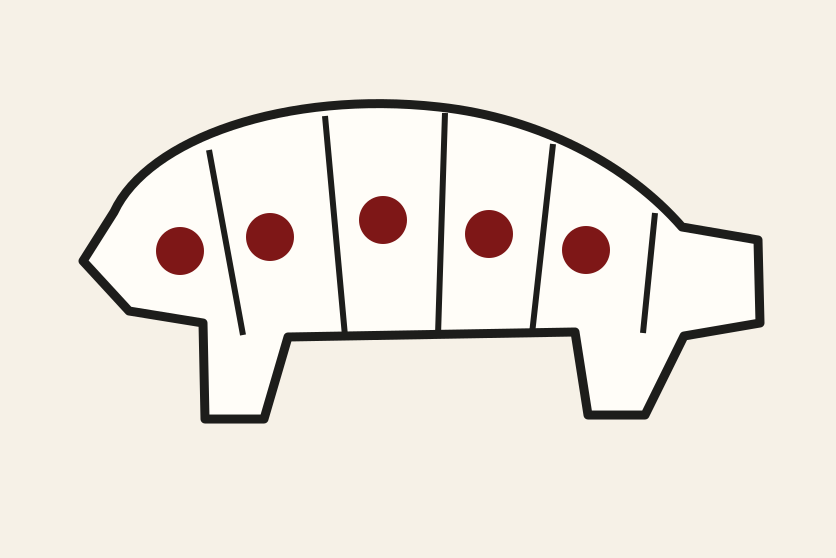
Ribeye is the rich steak, New York strip is the balanced steak, and tenderloin is the tender steak. Sirloin brings value. T-bone and porterhouse combine strip and tenderloin. Flank, skirt, hanger, bavette, and flat iron trade classic steakhouse shape for bold flavor and useful prices.
Knowing the cut tells you more than knowing a recipe. Tender loin and rib steaks suit quick dry heat. Working muscles from the chuck, plate, flank, and round need careful slicing, tenderizing, or more time.
Steak types at a glance
| Cut | Main character |
|---|---|
| Ribeye | Rich, marbled, tender |
| Strip | Beefy, firm, balanced |
| Tenderloin/filet | Very tender, mild |
| T-bone | Strip plus small tenderloin |
| Porterhouse | Strip plus larger tenderloin |
| Top sirloin | Leaner, beefy value |
| Tri-tip | Beefy roast or steaks |
| Flat iron | Tender chuck cut |
| Denver | Marbled chuck steak |
| Chuck eye | Ribeye-like value |
| Hanger | Loose grain, deep flavor |
| Skirt | Thin, bold, quick-cooking |
| Flank | Lean, broad, long grain |
| Bavette | Loose grain, juicy |
| Picanha | Sirloin cap with fat cover |
| Round steak | Lean and firm |
| Tomahawk | Long-bone ribeye |
| Rib cap | Rich outer ribeye muscle |
Use the industry cut charts to see where each muscle sits on the carcass.
1. Ribeye
Ribeye comes from the rib primal and contains several muscles divided by fat seams. The center eye is tender; the outer spinalis, or rib cap, is especially rich. Boneless and bone-in versions cook similarly when thickness is equal.
Choose it for: Marbling, a soft bite, and hard searing.
Watch for: Huge exterior fat pockets that raise price without adding edible steak.
2. New York strip
Strip steak comes from the short loin. It is tender but firmer than ribeye, with a defined grain and an exterior fat edge. The center is usually one consistent muscle, which makes it easy to portion and cook.
Choose it for: A strong beef flavor and less internal fat than ribeye.
Watch for: Tough connective tissue at one end of some cuts.
3. Tenderloin and filet mignon
Tenderloin runs inside the loin and does little work. Filet mignon is cut from its smaller end. The texture is soft and fine, but the flavor is mild.
Choose it for: Tenderness and compact portions.
Watch for: Uneven medallions and a high price based mainly on tenderness.
4. T-bone
T-bone has strip on one side of a T-shaped bone and a small tenderloin section on the other. The two muscles cook at different speeds, so point the tenderloin away from the hottest zone.
Choose it for: Two textures and dramatic presentation.
Watch for: Paying porterhouse prices for a tiny tenderloin.
5. Porterhouse
Porterhouse is cut farther back on the short loin and has a larger tenderloin section than T-bone under U.S. purchase specifications. It is often large enough to share.
Choose it for: A celebratory steak for two.
Watch for: Thickness, total weight, and the amount of bone.
6. Top sirloin
Top sirloin comes from the sirloin primal. It is leaner and less tender than strip, but it has a clear beef flavor and usually costs less. Center-cut steaks are the easiest to cook evenly.
Choose it for: Weeknight steak, kebabs, or salads.
Watch for: Thin cuts that overcook before browning.
7. Tri-tip
Tri-tip is a triangular bottom-sirloin muscle sold whole or as steaks. The grain changes direction near the middle. It handles roasting, smoking, or a reverse sear.
Choose it for: Feeding a group and making sandwiches.
Watch for: Slicing the whole roast in one direction.
8. Flat iron
Flat iron is cut from the top blade in the chuck. Removing a central seam of connective tissue turns a hard-working shoulder muscle into a tender, flat steak.
Choose it for: Tenderness at a price often below ribeye.
Watch for: Confusing it with an unsplit blade steak that still contains the seam.
9. Denver steak
Denver comes from the under blade in the chuck. It can carry fine marbling and a loose grain. The small rectangular steaks sear quickly.
Choose it for: A rich, less common butcher cut.
Watch for: Irregular thickness and seller-specific naming.
10. Chuck eye
Chuck eye sits near the ribeye at the front of the chuck roll. The first cuts can share some ribeye character at a lower price, but steaks farther forward contain more seams.
Choose it for: A casual pan steak or grill.
Watch for: Treating every chuck steak as the same cut.
11. Hanger steak
Hanger “hangs” near the diaphragm and has a deep flavor and open grain. It usually needs a central membrane removed.
Choose it for: Bistro-style steak, tacos, or a sharp sauce.
Watch for: Overcooking and slicing with the grain.
12. Skirt steak
Skirt is a thin diaphragm muscle with loose fibers and strong flavor. Outside skirt is generally more tender than inside skirt, but retail labels may not specify.
Choose it for: Fajitas and very hot, fast cooking.
Watch for: Leaving the membrane on or cooking past the desired center.
13. Flank steak
Flank is a broad, lean abdominal muscle with a visible grain. It is thicker and leaner than skirt. Marinade adds surface flavor; slicing creates the tenderness.
Choose it for: A shareable sliced platter.
Watch for: Thick slices cut with the fibers.
14. Bavette
Bavette, or sirloin flap, has a loose grain and rich beef flavor. It takes marinades well and can develop a hard crust while staying juicy.
Choose it for: Steak frites, tacos, or chimichurri.
Watch for: Naming confusion with flank and flap meat.
15. Picanha
Picanha is the top sirloin cap, also called coulotte. Brazilian-style preparation leaves a clear fat cap and cooks pieces on skewers. It also roasts well whole.
Choose it for: Beef flavor and crisp rendered fat.
Watch for: A very thick fat cap included in the price.
16. Round steak
Round comes from the rear leg and includes top, bottom, and eye of round. These cuts are lean and firm. Thin slicing, pounding, marinating, or braising helps.
Choose it for: Budget meals and lean sliced beef.
Watch for: Cooking a thick round steak like ribeye.
Read our leanest steak cuts for a closer comparison.
17. Tomahawk
Tomahawk is a ribeye with a long, cleaned rib bone. The edible steak can be excellent, but much of the visual size is bone. Compare the meat weight and thickness.
Choose it for: A dramatic shared presentation.
Watch for: Paying a large premium for bone and labor.
18. Rib cap
Rib cap, or spinalis dorsi, is the curved outer muscle of the ribeye. It is tender, richly marbled, and small. Butchers may roll and tie it into steaks.
Choose it for: A very rich tasting portion.
Watch for: High price and seller-created names.
How grade changes a cut
USDA Prime, Choice, and Select describe carcass quality, not cut identity. A Prime sirloin can have more marbling than a Select ribeye, yet the ribeye muscle still brings its own fat seams and texture.
Wagyu adds another layer. American Wagyu may carry a USDA grade, Australian Wagyu may use an AUS-MEAT marble score, and Japanese beef uses a separate yield-and-quality system. Read beef grades explained before comparing labels.
How to choose a steak
- Pick ribeye for richness.
- Pick strip for a firm steakhouse bite.
- Pick tenderloin for tenderness.
- Pick sirloin for value and a leaner plate.
- Pick flat iron or Denver for butcher-cut value.
- Pick flank, skirt, hanger, or bavette for sliced meals.
- Pick porterhouse when sharing matters.
- Pick round only with a method built for lean, firm meat.
Thickness is often more important than weight. A 1¼-inch steak is easier to brown without overcooking than a very thin wide steak. Compare price per pound, bone, exterior fat, and trim.
Food safety
USDA calls for whole beef steaks and roasts to reach 145°F followed by a three-minute rest. Ground beef needs 160°F. Mechanically tenderized steak should be labeled because blades or needles can move surface bacteria inward.
Use our stovetop steak method and temperature guide to cook by center temperature rather than color alone.
Steak cuts chart by primal area
A steak cuts chart becomes easier to remember when the names are tied to the animal.
- Rib: ribeye, rib cap, cowboy steak, and tomahawk. These cuts combine marbling with tenderness and tolerate high heat.
- Short loin: New York strip, tenderloin, T-bone, and porterhouse. The bone-in cuts combine strip and tenderloin in different proportions.
- Sirloin: top sirloin, tri-tip, picanha, bavette, and sirloin flap. This region offers strong beef flavor at a wider range of prices.
- Chuck: flat iron, Denver steak, and chuck eye. Careful seam cutting turns parts of the shoulder into tender steaks.
- Plate and flank: skirt, hanger, and flank. These long-fibered cuts favor fast cooking and thin slicing across the grain.
- Round: top round, bottom round, eye of round, and round steak. They are lean, economical, and less forgiving of overcooking.
Retail names vary by region and butcher. Ask for the muscle, primal area, thickness, and intended method when a label uses a house name.
Different steak cuts for grilling, pans, and braising
For grilling, ribeye, strip, top sirloin, tri-tip, picanha, skirt, and flank all work, but they need different zones. Fatty ribeye benefits from a cooler side for flare-up control. Thin skirt needs very high heat and only a brief cook. Tri-tip cooks more like a small roast before it is sliced.
For a skillet, choose a steak that fits without touching the sides. Strip, filet mignon, flat iron, Denver, and a modest ribeye make good pan-seared steak. A giant tomahawk may look dramatic but has poor contact and usually needs an oven or grill finish.
For braising, chuck steak, blade steak, short ribs, and some round steaks make more sense than tenderloin. Moist heat and time soften connective tissue. Paying for naturally tender steak types is wasteful when the meat will cook for three hours.
Bone-in versus boneless steak types
Bone changes shape, presentation, and how heat reaches the meat nearest it. It does not season the center like a spice. A bone-in ribeye or T-bone can cook unevenly because the bone shields one edge, so place that side near the hottest area or finish with gentler heat.
Boneless steaks are easier to portion, make full contact in a pan, and give a clearer edible price per pound. Bone-in cuts can be satisfying gifts and may protect part of the steak from overcooking. Compare the experience you want rather than assuming one format always tastes better.
How thickness changes every steak cut
Thickness can matter as much as the name. A ¾-inch ribeye races from browned to overdone; a two-inch top sirloin needs a controlled finish after searing. Thin steaks suit very fast meals, while thick steaks create more room for a dark crust and a rosy center.
For most home pans, one to 1½ inches is manageable. Salt, dry the surface, and use a thermometer. Thick steaks can be flipped often or moved to a moderate oven. Thin steaks should be cooked in small batches so the pan stays hot.
Choosing among steak types at the butcher counter
Start with tenderness, richness, and budget. Choose tenderloin for softness, ribeye for richness, strip for a firm classic bite, top sirloin for value, and skirt or hanger for pronounced beef flavor. Then inspect the actual package.
Look for even thickness, clean cutting, intact vacuum packaging, and a sell-by date that fits the meal. Marbling should be judged within the cut; tenderloin will not resemble ribeye. A discounted unfamiliar cut can be a good buy when you know its grain direction and cooking method.
When comparing types of steak cuts online, verify the count and net weight. “Four steaks” says little when each piece may vary from four to twelve ounces.
Common butcher-shop names. A flat iron steak comes from the shoulder blade; a ribeye steak may be called Scotch fillet; New York strip steak can appear as strip loin steak or Kansas City strip. A T-bone steak has the familiar T-shaped bone, while a porterhouse steak carries a larger tenderloin section. Filet mignon steaks come from beef tenderloin. Top sirloin steak, sirloin tip, bottom sirloin, and other sirloin cuts are not the same muscle. Chuck eye steaks can be surprisingly tender, while Swiss steak and stew meat favor slow cooking. Tomahawk steak is a long-bone ribeye, and round or lean meat needs a different method from tender cuts. Ask the butcher to identify the cut of meat when a regional name is unclear.
Cooking the chart. Pan searing works for strip, filet, flat iron, and modest ribeye portions. A meat thermometer helps each reach the intended temperature. A meat mallet can thin a tough round steak, but it cannot turn it into tenderloin. Roast beef methods suit large pieces, and slicing direction matters for flank, skirt, and sirloin. Cook every steak type according to thickness and structure rather than assuming medium-rare timing is identical.
Verdict
There is no single best steak type. Ribeye wins for fat, strip for balance, filet for tenderness, and sirloin for value. The lesser-known flat iron, Denver, hanger, and bavette are often the interesting buys because they trade a famous name for useful flavor.
About the research. Hats of Meat used standardized cut references and current retail terminology reviewed on July 16, 2026. Cut names can vary by region and seller.