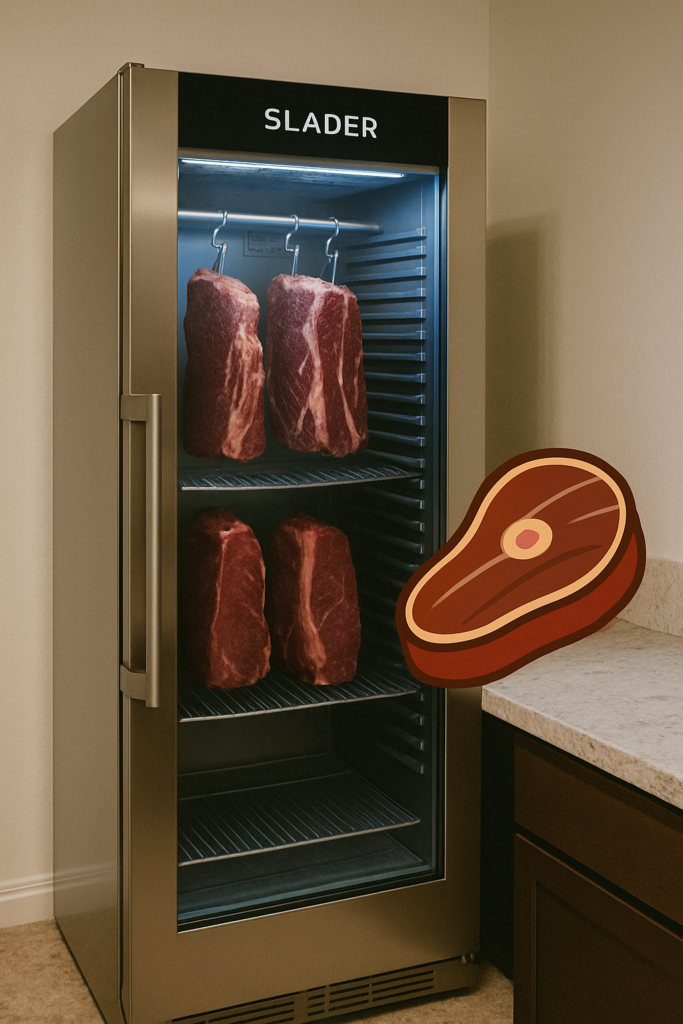
I’m Kayla, and yes, I actually bought a dry ager meat fridge. It sits by the garage door, near the mop and the dog bowls. My kids call it “the meat museum.” Cute, right? It makes me laugh, but also, they’re not wrong.
Was it worth it? Mostly, yes. But not without a few weird moments.
Why I Bought It
I love steak. I cook a lot. Weeknights are fast and simple, but weekends? That’s when I play. I wanted that rich steakhouse taste at home. I kept hearing about dry aging—deep beef flavor, nutty, buttery, a touch of blue cheese. So, I went for it and got a DRY AGER-style meat fridge. Glass door. Tight control on temp and humidity. A charcoal filter. Low, steady fan. It looks like a fancy wine fridge, but with beef.
Setup Took 20 Minutes, Then I Got Nervous
I plugged it in, set the temp to 1.5°C (about 35°F), and set humidity to 82%. The unit stabilized fast. I wiped it down, slid in a salt block, and then stood there like a goalie, just watching. I was excited. Also scared. Meat isn’t cheap. For the blow-by-blow of how that first year unfolded, you can check out my detailed journal in I Lived With a Dry Ager Meat Fridge for a Year. During that initial setup, I cross-checked my numbers with the temperature chart in Dry Aging Beef at Home: A Thermal How-To | ThermoWorks, and it matched almost exactly.
My First Ribeye: 45 Days of Waiting
I started with a bone-in ribeye roast—about 12 pounds. I trimmed the fat cap a bit, but not much. Less handling is better.
- Day 7: The surface looked dry and darker. No smell. Good sign.
- Day 14: A firm crust started to form. I noticed a mild, clean funk—like a tiny hint of blue cheese.
- Day 30: The meat felt tight. Color was deep red inside. The crust looked almost bark-like.
- Day 45: Time to pull.
I trimmed the dry crust and saved the fat for the skillet. Loss was around 18%. Normal. I cut steaks two inches thick. The sear was wild. The smell filled the kitchen in a good way—not loud, just… savory. First bite? Sweet, beefy, nutty. My husband blinked like, “Wait.” I nodded, like, “Yep.”
What Actually Works
- Flavor: Real change after 30 days. Big change around 45. Past 60, it gets funkier.
- Texture: Softer chew, but not mushy. Juices stay on the plate less.
- Consistency: Ribs and strip loins age the best for me. Tenderloin? Meh. Too lean.
- Smell: The fridge itself doesn’t stink when it’s clean. The meat has a clean, cheesy note when you open the door, then it fades.
What Bugged Me
- Noise: It hums like a normal fridge. Not loud, but you’ll hear it in a small space.
- Space: It holds one big primal or two small ones. When friends ask for “just one steak,” I have to plan ahead.
- Loss: Trim loss and moisture loss add up. Your 12 pounds might turn into 8. That’s the trade.
- Waiting: It’s a patience game. If you hate waiting, this will drive you nuts.
Cost Stuff People Don’t Say Out Loud
- Meat: I buy whole primals from a trusted butcher. Good source matters. You want clean, fresh, and well-aged to start.
- Power: My energy app shows about 35 kWh a month. Not crazy.
- Trimming: You’ll throw away the crust, but the fat trimmings are gold for searing potatoes.
Another cost-cutting trick is checking local classified boards when restaurants upgrade or close—lightly used vacuum sealers, meat slicers, or even entire dry-aging cabinets show up there for a song. Southern California readers can browse this Huntington Park Backpage directory to spot deals on equipment and sometimes even connect with neighborhood butchers, shaving serious dollars off the upfront investment.
If you want a deeper dive into selecting quality primals and gear, my favorite resource is the straight-shooting guide at Hats of Meat.
Cleaning and Safety (The Unsexy Part)
I set a reminder every Sunday. Door gasket wipe. Drip tray check. Quick wipe with a mild vinegar and water mix. The built-in light cycle and charcoal filter help, but you still need to clean. I also let the UVC cycle run when the fridge is empty, especially between batches. White mold? Normal. Green or fuzzy? Pull the meat, clean, and reset. I had one fuzzy patch once at day 10. I cleaned, patted dry, and it was fine. If you’re ever worried about safety, it helps to know that the European Food Safety Authority has found that aged meat can be just as safe as fresh when best practices are followed—EFSA: Aged Meat as Safe as Fresh Meat, When Done Correctly.
A Few Real Batches I Ran
- 45-Day Ribeye: Huge hit. Best balance of funk and sweet fat.
- 30-Day Strip Loin: Crowd-pleaser. I used it for a summer cookout. Salt and pepper only.
- 60-Day Strip: More funky. My brother loved it. My neighbor thought it was “too blue-cheesy.”
- 35-Day Pork Loin: It worked, but the flavor was mild. Fun once, not my go-to.
- 90-Day Ribeye: Intense. I liked it sliced thin with a splash of brown butter and lemon. Not for everyone.
I’m also tempted to branch out beyond beef—venison, maybe even exotic game. My friend keeps raving about axis deer, and after reading this honest take on cooking axis deer meat, I’m convinced it deserves a future spot in the meat museum.
Little Things I Learned
- Don’t crowd the chamber. Air needs space to move.
- Leave a small fat cap on. It protects the meat.
- Don’t fuss with it. Open the door less.
- Keep notes. Days, cuts, weights. It helps a lot.
- Rest steaks after trimming and cutting. Even an hour in the fridge helps.
- A ripping hot cast iron pan beats a grill for the sear. I finish with a knob of butter and a clove of smashed garlic. Simple and bold.
Something I didn’t expect: once the steaks are trimmed and seared, they photograph ridiculously well—so well that my group chat basically demanded nightly “food nudes.” If you’ve ever wondered why Snapchat is the go-to platform for sending any kind of quick, private photo, from ribeyes to risqué shots, check out this Snapchat nudes guide to learn how the app’s disappearing-image feature became a cultural phenomenon and how to share safely without leaving a digital trail.
What Went Wrong (And How I Fixed It)
I tried aging a small roast that was already cut down. Bad move. Too much surface, not enough mass. It dried too fast and tasted flat. I also tried 70 days on a cheaper cut. The flavor felt muddy, not deep. Lesson: start with good beef, and keep it whole.
Another time, I got cocky and opened the door every other day to “check.” The crust didn’t set right. Now I peek through the glass and leave it alone.
Who Should Think About This
- Home cooks who love steak and love a project.
- Folks who host a lot—birthdays, game days, big grilled meals.
- People who don’t mind logs, cleaning, and planning ahead.
Who should skip it? If you want fast meals, or you hate trimming. Or if you don’t have a spot for it where it can sit level and stay cool.
Final Take
I’m glad I bought it. I use it about five times a year, mainly spring through fall when we grill more. A 45-day ribeye roast still makes me smile. It’s a fun mix of science and craft—like baking bread, but with beef and a little swagger.
Is it a luxury? Yes. Is it only for chefs? No. If you’ve got the space, the patience, and a good butcher, a dry ager meat fridge can be a quiet star in your kitchen. Or your garage. Mine sure is.
You know what? The next batch is a 40-day strip for New Year’s. I’ve already named it. That’s how you know I’m hooked.